THE ADVENTURE RACING GUIDE
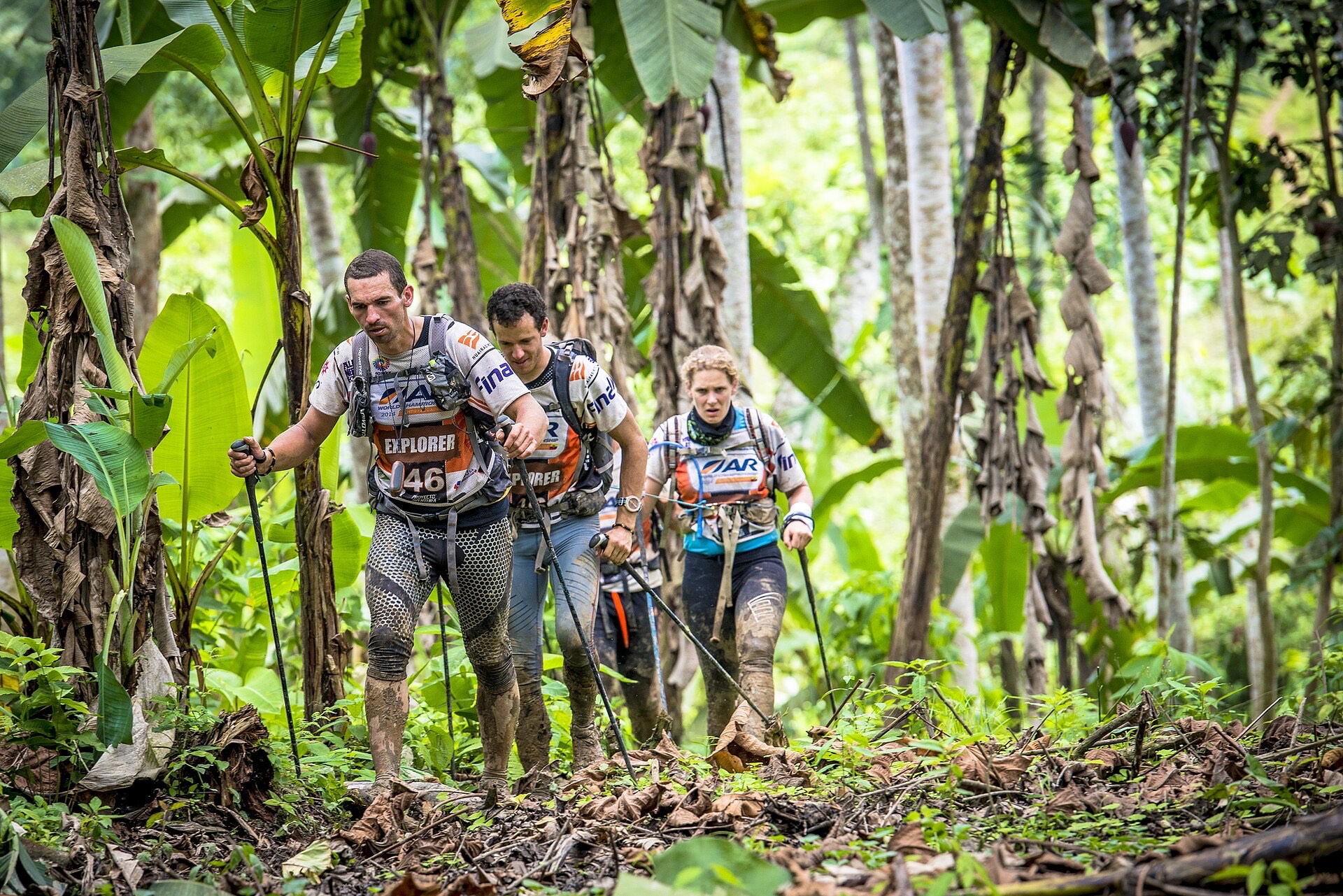
Adventure racing is a team sport where you navigate between checkpoints with a map and compass, switching between trekking, mountain biking and paddling. Races run from a 3-hour sprint to 10-day expeditions, and the course is usually unmarked, so the fastest team is often the one that navigates best. You don't need to be an elite athlete to start: most beginners enter a sprint race as a team of two, walk the hard parts and learn the map on the way.
START HERE
Your first days of adventure racing: the steps, the habits that keep you safe, the gear to get, and the mistakes everyone makes.
GETTING STARTED
A path from your first day.
- 1
Learn Map and Compass at a Local Orienteering Event
Orienteering clubs run cheap, beginner-friendly courses most weekends. A few events teach you to orient the map, follow handrails like streams and trails, and take a compass bearing.
- 2
Build a Base in Running, Biking and Paddling
You don't need to be fast at all three, but you should be comfortable for several hours in each. Hike with a pack, ride gravel and dirt trails, and get time in a kayak or canoe.
- 3
Find a Teammate or Two
Beginner sprints usually take teams of two to four. Race-series Facebook groups, USARA and local clubs help people find partners. Pick people you like spending hard hours with.
- 4
Enter a Sprint Race (2–6 Hours)
Look for a race with a novice course. Many rent boats and paddles. Read the race instructions twice and check the mandatory gear list early.
- 5
Practice Transitions and Pack Your Kit
Lay out shoes, helmet, PFD and food in the order you will need them. Simple transitions save more time for beginners than fitness does.
- 6
Step Up to 12 and 24 Hours
After a few sprints, try a 12-hour race with night navigation, then a 24-hour. Each jump adds new problems: darkness, cold, food and sleep.
SAFETY FIRST
The habits that protect you on every outing.
Stay With Your Team
Almost every race requires teammates to stay within a short distance of each other (often about 100 m or within sight and sound). It is a safety rule, not just a tactic: if someone gets hurt or lost, the team is there.
Carry the Mandatory Gear — and Know How to Use It
Headlamp with spare batteries, a waterproof jacket, an emergency blanket, whistle and first aid kit are standard. Race officials can check packs at any checkpoint, and missing items earn time penalties or disqualification.
Respect Cold Water
Paddle legs often use cold lakes and rivers. Wear your PFD the whole time, dress for a swim, and keep a dry layer in a sealed bag. Capsizing far from shore is one of the biggest risks in the sport.
Learn Basic Wilderness First Aid
Blisters, sprains, hypothermia and dehydration are common, and help can be hours away. A wilderness first aid course helps you know when to keep going and when to stop.
Eat and Drink Before You Feel It
Long races are lost to bonking and dehydration more than to slow legs. Eat a little every 30–45 minutes and drink regularly, even in cold weather.
Know When the Course Is Closed
Learn the cutoff times and dark-zone rules before the start. Racing tired toward a closing river at dusk leads to bad decisions; taking the short course is better than an unsafe push.
WHAT TO GET FIRST
Buy the essentials, borrow or rent the rest until you know what you like.
Essentials
- Mandatory kit listEvery race publishes one (first aid, emergency blanket, whistle, headlamp, rain shell). Missing items mean penalties or a DQ.
- Mountain bikeA reliable hardtail or light full-suspension XC bike with a map board. Comfort beats speed over long legs.
- Trail shoesDraining, grippy shoes that handle wet feet for hours. Pair with foot care (tape, lube).
- Race pack (15–30 L)Holds the mandatory kit, water and food, and fits under a PFD.
- Compass and map caseMost races ban GPS navigation. A baseplate or thumb compass and a waterproof map case.
- Headlamp + spare batteriesLong races run through the night; carry a bright main lamp and a backup.
- Paddling gearPFD, paddle and often a whistle/light. Many races supply the boats; check what you must bring.
- Food and hydration systemPractice your race food in training. Plan what goes in each transition box.
Add as you go
- Climbing harness + rope-section kitHarness, helmet, locking carabiners and a descender for the ropes sections when the race has them.
- Bike lightsFront and rear lights for night riding; often mandatory.
- Tow systemA bungee tow line lets the strongest teammate help on the bike or on foot.
- Transition boxesLabelled boxes the race carries to each TA: dry clothes, food, spares, foot care.
ANATOMY OF AN ADVENTURE RACER'S KIT
Real racers on foot, on the bike and in the boat, labelled, plus the mandatory kit that every team carries. Tap a number to see what each part does, the options with their real numbers, and how to choose. Always check your race's own kit list: it is the one the officials check.
Race pack
A vest-style pack that holds the mandatory kit, water and food, with bottle or snack pockets on the front straps so you can eat and drink without stopping. It is worn on every leg, including under a PFD in the boat.
- Sprint pack8–15 L3–8 hour races: water, food, jacket, first aid
- 24-hour pack15–25 LOvernight races: full thermal layers, lights, more food
- Expedition pack25–35 LMulti-day legs with sleeping bag and shared team kit
- Hydration1.5–3 L bladder or 2–4 soft flasksBladder for long legs; flasks are easier to refill and check
Compass
Map-and-compass navigation is the core skill. ARWS races require two magnetic compasses per team; watch compasses don't count.
- Baseplate compasswith a mirror or a large baseplateTaking and following bearings on foot
- Thumb compassworn on the thumb, holds the mapFast running navigation
- Bike compassmounted on the map boardThe bike leg
How to choose: Buy one balanced for your race's magnetic zone (compasses for the southern hemisphere differ).
Map case
Race maps get soaked, torn and muddy. A waterproof, clear map case (or the organisers' laminated maps) keeps them readable for days.
- Clear map caseA4 or A3, zip or roll sealTrekking and paddling legs
- Clear adhesive film (contact)applied at map plottingExpeditions with many maps
Headlamp
Mandatory for every racer in any race that may run into the dark (ARWS: waterproof, with batteries for the whole section). Night navigation needs a bright, even beam.
- Sprint / backup300–500 lumens, AAA or small batteryShort races, the spare light
- Expedition main lamp600–1,500 lumens, rechargeable or long-burnNight navigation on foot and bike
How to choose: Look at burn time at the brightness you'll actually use, not peak lumens; carry spare batteries.
Mandatory kit (typical ARWS list)
Every race publishes a list and checks it at random; missing items mean penalties or disqualification. This is the AR World Series standard list; sprints ask for much less.
- Each racerwhistle, headlamp, waterproof jacket with hood and taped seams, waterproof pants, fleece (175 g+), base-layer top and legs, beanie or buff, survival blanket, sleeping bag or bivy (150 g+)Carried at all times
- Each team2 compasses, maps and course notes, first aid kit, fire starter, knife (50 mm+ blade), strobe light, emergency shelter (tent or 4-person bothy bag, 400 g+), sealed phone, organisers' GPS tracker, cameraShared between teammates
- First aid kit (ARWS)2 m × 7.5 cm elastic bandage, triangular bandage, 2 dressings 7.5 × 7.5 cm, tape, antihistamine, anti-diarrhoeal, glovesIn a waterproof bag
How to choose: Lay the list out and tick it off before every race. Weigh borderline items: some lists set minimum weights.
SPRINT, 24-HOUR AND EXPEDITION KIT
- Sprint (3–8 h)
- 2 or 4, often mixed
- 24 hours
- 2–4, mixed
- Expedition (3–10 days)
- 4, mixed, usually unsupported
- Sprint (3–8 h)
- 8–15 L
- 24 hours
- 15–25 L
- Expedition (3–10 days)
- 25–35 L
- Sprint (3–8 h)
- Short list: jacket, whistle, first aid, blanket, compass, phone
- 24 hours
- Adds headlamp, bike lights, thermal layers, emergency shelter
- Expedition (3–10 days)
- Full ARWS list: layers, sleeping bag or bivy, tent or bothy bag, strobe, fire starter, tracker
- Sprint (3–8 h)
- Pre-marked maps, compass
- 24 hours
- Plotting from grid references, compass, map board
- Expedition (3–10 days)
- Many maps, plotting the night before, two navigators
- Sprint (3–8 h)
- Any reliable MTB
- 24 hours
- XC MTB with lights and map board
- Expedition (3–10 days)
- Full-suspension XC, spares in a bike box
- Sprint (3–8 h)
- Sit-on-tops supplied
- 24 hours
- Supplied kayaks or canoes
- Expedition (3–10 days)
- Kayaks, canoes or packrafts; your own paddle
- Sprint (3–8 h)
- None
- 24 hours
- None or a 1–2 h nap
- Expedition (3–10 days)
- About 1–3 h a night
- Sprint (3–8 h)
- Carried snacks
- 24 hours
- 1–2 gear boxes
- Expedition (3–10 days)
- Gear and bike boxes at each TA
Lists change from race to race and year to year: always pack from the current race's official kit list.
Typical ranges, checked 2026-11-13; check the maker's spec for a given model.
COMMON MISTAKES
Every new adventure racing beginner makes these.
Following other teams instead of navigating
Other teams may be looking for a different checkpoint, or be lost themselves. Keep the map in hand, check off features as you pass them, and trust your own route.
Going out too fast
Start at a pace you could hold for the whole race. The team is only as fast as its slowest member, so use towing and share weight early.
Messy transitions
Pack each leg's gear in labeled bags and practice changes at home. Leave the TA with food in your pocket, the next map folded and lights ready.
Not eating enough
Set a timer to eat every 30–45 minutes. Bring foods you like and can eat while moving, and test them in training.
Wearing new gear on race day
Shoes, packs and bike shorts need many hours of testing. Blisters and chafing ruin more races than any course.
Ignoring small problems
Stop and fix a hot spot, a rubbing strap or a loose bolt right away. Small problems grow over hours.
LEVEL UP
You've finished a few sprint races. The next steps are longer races, better navigation and a team that works well under pressure. Most racers move from 12-hour to 24-hour races over a season or two, and the best teams build toward multi-day and expedition races over several years.
SKILLS BY LEVEL
6 skills from foundation to expert. Open one for its sub-skills and drills.
MILESTONES
Know where you stand, and what to aim for next.
Beginner → Intermediate
- Finish several sprint races as a team
- Navigate a race without major errors
- Finish a 12-hour race
- Run smooth transitions
- Comfortable in a kayak or canoe for 2+ hours
Intermediate → Advanced
- Finish a 24-hour race on the full course
- Plot checkpoints accurately at speed
- Navigate at night with confidence
- Abseil and ascend fixed ropes
- Podium at a regional race
Advanced → Expert
- Finish a multi-day race
- Finish an expedition race of 3+ days
- Manage sleep over several days
- Compete at USARA Nationals or an ARWS qualifier
- Qualify for the World Championship
TRAINING PHASES
Each phase builds on the last. Repeat the cycle to break through plateaus.
Base Building
Weeks 1–6
Aerobic fitness across disciplines and basic navigation
- 3–4 easy runs or hikes per week
- 2 rides per week, one long
- 1 paddle session per week
- 1 orienteering event or map walk every two weeks
Multisport Endurance
Weeks 7–12
Longer days and back-to-back disciplines
- Weekly 4–6 hour mixed session (ride + hike or paddle + hike)
- Hill hikes with a loaded pack
- Transition practice at home
- A rogaine or sprint race as training
Night & Navigation
Weeks 13–18
Night skills, plotting and team systems
- One overnight session per month
- Plotting practice from UTM lists
- Night orienteering or a 12-hour race
- Rope skills session
Race Specific
Weeks 19–24
Simulating race conditions, then tapering
- A big training weekend with the team
- Full gear and food rehearsal
- Bike boxing and gear box packing practice
- Taper the last 10–14 days
DISCIPLINES
Where riders go from here. Tap a branch to see how people get into it.
Most racers start with a sprint race of a few hours as a team of two. From there you go longer (12 and 24 hours, then multi-day and expedition races), get better with a map, or sharpen the paddling, biking and rope skills that every course needs. Tap a branch to see what it takes and what comes next.
Sources: Wikipedia: Adventure racing (formats, disciplines) · Wikipedia: Rogaining · Adventure Racing World Series: race calendar and categories · ARWS: Estonia ACE / La Sportiva win the 2026 World Championship · ARWS: Adventure Race Croatia - ARWC 2027 · USARA: 2026 National Championship results · ARWS: First Junior Adventure Racing World Championship winners · International Rogaining Federation: WRC 2027 press release
GRADES & DIFFICULTY
Each row is one grading system, the way it looks on the trail. Read down a column to convert. Pick a level to see the terrain.
- Race formatARWSSprint (3–8 h)
Pick a level to see what adventure racing terrain looks like there.
GLOSSARY
- CP (checkpoint)
- A control point on the course that teams must find and record, with a punch, a code or an electronic chip.
- TA (transition area)
- Where teams switch disciplines, such as bike to paddle, and pick up gear boxes or bikes.
- Dark zone
- A section, often a river, that teams may not enter at night. Arriving late can mean waiting hours for daylight.
- Short course
- A shortened route given to teams that miss a cutoff. They stay in the race but rank behind full-course finishers.
- Mandatory gear
- Kit every racer or team must carry, such as a headlamp, jacket, first aid kit and emergency blanket. Gear checks happen at random.
- Gear box
- A plastic bin of food and kit that the organizers move between transition areas.
- Plotting
- Marking checkpoints on your maps from a list of grid references before or during the race.
- UTM
- Universal Transverse Mercator, the grid most races use to give checkpoint locations.
- Mixed team
- The standard elite category: a team of four with at least one person of each gender.
- Unsupported
- No personal support crews; teams carry what they need and use only their gear boxes.
- Sleep monsters
- Slang for the hallucinations racers get from severe sleep deprivation on long races.
- Cutoff
- A time by which a team must reach a checkpoint or TA to stay on the full course.
- Rogaine
- A score-format navigation event; the name comes from the founders Rod, Gail and Neil Phillips.
- Towing
- Linking a stronger teammate to a slower one with a tow line on foot, bike or boat so the team moves at one speed.
- Prologue
- A short opening stage, often in town, that spreads the field out before the main course.
LEARN MORE
GO RACE.
Find a spot near you, plan a trip, or see who's who in adventure racing.